


The presence of a Dalek story so early on in Matt Smith's run (third) seems like insurance against viewers leaving before they've given the new guy a chance.
It's certainly a Dalek-lite story, the titular baddies putting in their weakest appearance yet. However on the plus side, much good comedy does get mined from their ingratiating themselves into the British army during World War Two, such as the one gliding around with a tray grating "WOULD-YOU-CARE-FOR-SOME-TEAAA?"
If I didn't know better, I'd swear that this was some kind of comedy sketch-show…
Another nice in-joke is the line "I-AM-YOUR-SOL-DIER", a nod back to an infamous similar line from the 1966 story Power Of The Daleks. Little touches like this do a lot to reassure me that the writers know what they're doing, whilst not even slightly inconveniencing more recent viewers. (ie. most viewers)
The whole WW2 setting was great, particularly with Ian McNeice's excellent portrayal of Churchill as such a cheery fellow. He really looks the part, and Amy even gets to address him with the words "OI! Churchill!"
Summoned by the wartime PM, the Doctor and Amy discover that one of his scientists - Professor Edwin Bracewell played tremendously by Bill Paterson- has just impossibly invented the Daleks.
Conversely, the Daleks actually turn out to have invented Professor Bracewell. This is a fact that he is mortified to realise when one of them exterminates his hand and reveals him to be a robot. He has a lot of grief over that. Well, you would. He has to handle learning that all his memories are false, and that really messes him up.
Forced into proving what metal menaces the Daleks actually are, the Doctor discovers too late that this was their actual intention all along.
As the story quite unexpectedly cut away from London and across the solar system, I thought things looked to be really taking off, but not for long.
As soon as the Daleks teleport up to their ship without exterminating the Doctor first, well, I just had to start waiting for a later explanation. There wasn't one.
It all gives way to a lot of talking between the Doctor and his nemesises(es)(whatever), including a funny line about a biscuit, but very little action between them.
Executive Producer Steven Moffat seems determined to restart Doctor Who again from scratch this season, having in recent weeks replaced the cast, the credits, the show's directors, and now even had the Daleks redesigned. Yes, behold - this week the Doctor meets the Power Ranger Daleks.

I think these look pretty good. They still look enough like regular Daleks that an in-plot explanation for their change isn't even necessary, but at the same time they're more imposing and reminiscent of the movie ones from the 1960s.
Actually, this episode features two new designs for them, the other being this special UK variant:

They look great as well - and this one even has its 'ears' covered up to prevent them from flashing during the blackout!
Speaking of which, that the Daleks chose to wipe-out London by simply turning all its lights on was a bit ingenius too.
Fortunately a few of Bracewell's actual inventions ultimately save the day, although the jump in the storyline required to suddenly realise his designs, and fit them onto aircraft, AND attack the Dalek ship is too much for my liking. There just seemed to be a scene missing there, or at the very least a couple of weeks.
As my friend Brian put it tonight "Why not just have the robot scientist say he'd built... them but they were untested? Script plausability and dramatic tension solved in one pop."
Added to that, just what were the Daleks thinking - effectively giving mankind the technology to attack their own saucer with? Stoopid Daleks. Next they'll be broadcasting live whatever's taking place on their ship.
However the notion of seeing the Daleks face-off against the British army was a really good idea, although let's be honest, what we all really want to watch is a battle between the Daleks vs. the Nazis.
Which brings me to a huge bit of praise. I rarely compliment any film or TV show on the quality of its special effects, because today you can do just about anything with CGI. But this final showdown sequence - blimey! This was absolutely stunning! It was like watching Star Wars!
The Daleks' final ace in the hole - to blow-up said human-robot - fails, because they have somehow built it to not detonate if the robot believes that it is human. I so didn't get that.
My biggest problem though had to be with the episode's premise. Specifically, that in the 1940s Churchill et al honestly believed that Bracewell had invented a machine capable of independent thought, and that each Dalek did not actually contain someone (perhaps an enemy Nazi) sitting inside controlling it. I know it's science fiction, but that leap on the part of the characters is too much of a leap for me.
All in all, this is the third story of three this season to have not held together particularly well. Which is a disaster. The scripts to all three have felt, to me, unfinished. These are exactly the sort of plotting tangles that I really hoped we had seen the end of, now that we have such a great new head writer.
Instead I find myself typing the same word that I have been for the last five years - proofreaders! :)
More promisingly on that subject, this episode also featured the breaching of how modern-day Earth could have been invaded so many times without its population remembering it afterwards. The Doctor notices that Amy has forgotten the Daleks' invasion in The Stolen Earth, and resolves at the end of the episode to investigate further.
We may not have had a good story yet this series, but things are still looking very promising.
Labels: doctor-who, tv

Celebrated my birthday today.
As you can see, my family very kindly gave me:
CD: Hymns A'Swinging by The Mike Sammes Singers and The Ted Taylor Organsound featuring Tubby Hayes
CD: Wow Gospel 2010 by various
Comic: Fantastic Four Annual #21
Comic: The Spectacular Spider-Man #138
Comic: Spider-Man Versus Wolverine #1
Comic: What If? Spider-Man Versus Wolverine #1
A Fair Trade t-shirt
Book: Wish You Were Here - The Official Biography Of Douglas Adams by Nick Webb
A lens cap
2 ISO 100 35mm camera films
4 toner cartridges
A BIG bar of Dairy Milk chocolate
4 Frijj drinks
A bottle of shampoo
The Daily Mail from my actual birthday this year, with the crossword left blank by my mum!
And...

... a cake!
Labels: diary

Ten-part animated series about… uh…
Like The Prisoner and VR.5, Ӕon Flux takes some decoding. It's therefore the kind of series that probably stands up well to repeated viewings.
This box set contains all ten episodes, plus the pilot and five shorts. Unfortunately it doesn't tell you what order to watch them in, and although the series proper has transmission dates, it appears that these do not denote same order as the episode numbers. So has the order been fixed for this release, or messed-up?
Maybe it doesn't matter, especially if you have a slow brain like mine. Here is a quick break down of the way I watched them, but with the proviso that if you've come to this page looking for an episode guide, try Wikipedia.
The first six contain no dialogue.
War
Aeon is killed by a guy with a sword, who seems to take over for the rest of the short.
Gravity
Kissing through the open windows of a speeding train and an aircraft, Trevor passes a tiny scroll into Aeon's hollow tooth. She subsequently looks at it, eats it, climbs out of the plane, misses her footing and falls. During her minutes in freefall, she uses her binoculars to watch two operatives hauling a bright light up over a cliff edge below her.
Leisure
Stealing some eggs, Aeon cracks one of them open and observes through a microscope two tiny insects fighting each other. She is then caught by the giant insect mother (twice her height) and devoured.
Mirror
Aeon has a really bad day. She clumsily falls while breaking into a place, and the whole thing is caught on videotape. She spills cold coffee down her arm, and then turns the wrong tap on to wash it, drenching her hair. Then she gets shot dead. They should have called this Bad Hair Day.
Tide
In the easiest to follow short of the series, Aeon… oh what the heck, yes, she gets killed again.
Pilot
Aeon steals a case off of someone whose veins are turning green. He perceives a can turn into a fish, which then explodes. While watching the news about the green vein disease in gibberish, Trevor makes himself a biscuit using a spread he keeps inside his finger. Aeon treads on a tack, falls to her death and is then suspended over a red sea while her feet are licked by a blue man.

Meanwhile a teenage boy buys a magazine with a picture of her on the cover tickling her own feet with a feather.
This is the last episode with no dialogue. Whew - this should make things easier.
Utopia Or Deuteranopia?
From this point until the end, as well as a dialogue track, each episode begins with credits and a voice-over. You know how credits with a voice-over work, right? The words are there to clue in new viewers as to what the show is all about, just like on that start of Star Trek.
Trevor: "The dream to awaken our world."
Aeon: "You're out of control."
Trevor: "I take control. Whose side are you on?"
Aeon: "I take no side."
Trevor: "You're skating the edge."
Aeon: "I am the edge."
Trevor: "What you truly want, only I can give."
Aeon: "You can't give it, can't even buy it, and you just don't get it."
Yes. Yes I don't.
Okay, so let's flag the theme and just dive into the episode's opening narration.
Trevor: "The unobserved state is a fog of probabilities. A window of and for error. The watcher observes, the fog collapses, an event resolves. A theory becomes a fact.
What is the truth? Tell me, if you know, heh, and I will not believe you. Things are never what they seem. Clean gloves hide dirty hands, and mine are dirtier than most."
Trevor seizes power over the country of Bregna from Clavius, but holds him captive underneath his bedroom by keeping his body at a specific vibration. By wearing a particular pair of braces, Trevor can match the vibration, open a door in Clavius' chest and walk down a corridor inside him to a red-curtained cave where he keeps a blue dress for Aeon to wear.
Thanatophobia
There's a wall around the country that contains a very thin railway. People have small tubes in their lower backs. At the end there's a girl with no arms. Is she supposed to have dreamt this?
A Last Time For Everything
Trevor wants to go to bed with Aeon, so he steals her DNA and clones her several times. Unfortunately she's already resolved a counter-plan, which her clone begins to carry out upon awakening.
Ether Drift Theory
Aeon infiltrates a floating cube full of artificial life-forms inside an ocean formed entirely of a paralytic substance. Then the cube gets eaten away by a powerful super-acid. With transport destroyed, Aeon must merge with another being in order to escape, but by that point there’s no-one else left. So, in a somewhat unexpected ending, she gets entombed forever under the paralytic sea. Drag.
The Purge
Trevor is implanting his subjects with artificial consciences. When Aeon passes-out and gets captured, she awakens on a TV chat show, and finds she is unable to kill Trevor. Is this because of her own conscience, or his artificial one? Then ‘Trevor’ turns out to be a robot duplicate with a flip-top head. So was her desire to kill him a false instruction?
The Demiurge
With Howard Baker taking over the direction from Peter Chung, everything gets quite a bit more philosophical.
Trevor: "Light, in the absence of eyes, illuminates nothing. Visible forms are not inherent in the world, but are granted by the act of seeing. Though the world, and events, do exist independent of mind, they obtain of no meaning in themselves none that the mind is not guilty of imposing on them."
Tonight, Aeon captures a god-like being and tries to expel it into space. Trevor is determined to keep it on Earth. Weird, blue stuff ensues.
Trevor: "The height of tension in any game occurs when the rules allow for the influence of human judgement. The advantage in this instance is held by the player who drops the ball to allow the opponent a hollow victory. Half of eternity is still eternity… Infinity and zero are different degrees of the same value… Pain isn't real beyond the individual who feels it, but the nail is real."
Isthmus Crypticus
Trevor is keeping two half-human, half-birds in captivity, both of whom are lusted after by various factions, including himself.
Reraizure
These are getting harder to summarise.
Chronophasia
In a lab under the jungle, Aeon is attacked by a giant baby with fangs, and contracts a disease that traps her in a time loop, until a naked child gives her new life in another world.
End Sinister
Aliens. Using suspended animation, Aeon chases Trevor a thousand years into the future, despite the fact that neither of them has a way back. All right so I took most of that off the DVD jacket. It's come to this.
There, now that wasn't so hard.
In Summary:
Whuh?
(with thanks to Herschel)
Available here.

Labels: tv

In science-fiction terms, the 1990s were surely the decade of virtual reality.
Wild Palms, The Lawnmower Man, VR.5, Doctor Who: The Paradise Of Death… I could go on and on.
It's no wonder then that in 1999 the big movie studios rushed to get their last VR movies out before the new decade arrived, bringing with it the switch-over to the environmental catastrophe genre.
The Matrix was the most obvious one in that last year. Then there was the more feel-good Thirteenth Floor. But the real underdog must surely be David Cronenberg's creatively capitalised eXistenZ.
Skipping both the fighting of The Matrix and the fluffiness of Thirteenth Floor, eXistenZ looks like a low-budget TV movie, and is so dialogue-based as to give the illusion of having been adapted from the stage. (which it wasn't)
I guess the biggest hurdle that it has to overcome is that it's set in the near future, when there are quite a few new concepts and words to take on board. Even the characters have unfamiliar names like Allegra, Kiri and Yevgeny, and that's before I even start on the surnames!
The visual effects range from the beautiful mutant insect to the embarrassing game-pods, but I found that by the end I could forgive all of the production's shortcomings, simply because of the level of thought that had gone into conceiving this world.
The film's main theme is that of virtual reality overtaking actual reality, as people increasingly choose to live in a realm that indulges them, instead of one that challenges.
Allegra's allegory has similarities to Agent Smith's reasoning that we humans need imperfection in our lives, or we just withdraw.
There's also a faction of extremists running around, who perceive the new reality as deforming the old one, and sure enough their paradoxical solution is to start killing. I don't know whether that even qualifies as a sub-text.
eXistenZ is definitely one of the better VR movies, but it sure isn't escapism.
After all, who on Earth would want to live in a creepy world like that one?
(with thanks to Herschel)
Available here.
Labels: films

Writer: Roger Stern
Breakdowns: John Buscema
Finisher: Tom Palmer
Letterer: Jim Novak
Colorist: Christie Scheele
Editor: Mark Gruenwald
Editor In Chief: Jim Shooter
I have to admit, this is my kind of comicbook.
Because, despite the impression you might get from the cover above, no-one fights any bad guys in it.
Although there are indeed villainous things going on behind the scenes, this issue is primarily driven by the Avengers' need to find a new base to launch their flying Quinjets from. The FAA have revoked the outfit's landing rights in Manhattan (something to do with endangering too many civilians' lives would you believe), while the National Security Council are also dragging their heels restructuring the team's priority clearance.
Maybe I'm a big nerd for enjoying the admin side of superheroing so much, but it's just this sort of bureaucratic red tape that makes the Marvel Universe so believable for me.
The second half finds our costumed crimefighters touring a potential new site, and here one of them actually does get into the bare-knuckle fist-fight depicted above. However it turns out, after four pages of blows and a coincidental advert for Hulk Hogan's new TV show, that Hercules is actually just teasing the Sub-Mariner to cheer him up, so that doesn't really count.
It's the same plot-device that author Roger Stern would pull a year later with She-Hulk goading the Thing in Fantastic Four #299, but I can't really criticise him for repeating a plot that I like.
Oh, and in the final panels the Sub-Mariner agrees to join the Avengers to replace Starfox. Hmm, that's all this issue was really about, wasn't it?
Like I said, my kind of comicbook.
(with thanks to Herschel)
Sometimes available here.
Labels: comics

It seems that I collected John Baker's work for years without even being aware of it.
John worked for the BBC Radiophonic Workshop from 1963-1974, producing a huge amount of experimental music using the technology of the day. You know, the usual sorts of musical instruments - rulers, shampoo bottles, cash registers...
Well, they were the kind of brik-a-brak that everyone in the BBC Radiophonic Workshop used to perform on, aided by many painstaking hours of pitch-shifting and tape-splicing to assemble it all of course.
Much of John's early work for the Beeb is funky, intriguing and haunting all at the same time. In fact, it's his compositions for the corporation that are concentrated on in the first compact disc.
His theme for 1974's Dial M For Murder uses the unthreatening sound of a ring-tone and mutates it into… hum, well, I might not wait so long for you to pick up next time.
Then there are the news idents for BBC Radio Sheffield. I've never visited that part of the country, but boy, they sure used to have some lively news happening up there.
Then there's the disturbingly titled The Locusts, which is every bit as creepy as the name suggests.
Towards the end of the disc is what might be his finest composition - music from the 1960s underground crime series Vendetta: The Sugar Man. This is crammed with so much saxophone and elastic band twanging that it sounds like Seinfeld, only made as a crime caper.
Volume two however explores John's musical life outside of his day job. Inevitably a man of his creative talents also found himself composing independent library music and scoring commercials.
What maybe is surprising though are his more traditional recordings, which this second disc increasingly delves into. There are some beautiful piano and jazz tracks here, as well as some priceless home recordings, including an unmarked tape reel that he apparently laid down as late as the 1980s.
Despite the sheer originality of the pieces he created, the most vivid thing on either release though is the sad biography which accompanies the first volume. Here his brother Richard unashamedly tells his devastating story as it was, and charts John's personal battles both inside and outside the BBC.
The final line in particular speaks volumes about the fragility of not only creative genius, but the human condition itself.
"His misfortune was to be born into a world for which he was too tender."
So long John, and thanks for finding so much music in something as mundane as a cork.
Available to sample and buy here.

Script and pencils: John Byrne
Inker / embellisher: (#278-283) Jerry Ordway, (#284) Al Gordon
Colors: Glynis Oliver
Seven issues telling three overlapping stories of the four Fantastic.
The first tale is, in my limited archive, quite simply John Byrne's finest. Robot duplicates of Doctor Doom rerun an old plan of his, believing that they have compensated for the error in the original's execution. It just goes to show how tough it is to anticipate the future.
The plan in question concerns programming the Baxter Building to lift-off like a rocket and, once it has left Earth's atmosphere, blow up with our heroes inside.
If transforming their headquarters into both a spaceship and a giant bomb wasn't inventive enough, once the plan has succeeded, the way in which the FF combine their individual powers to survive the vacuum of space is nothing short of truly innovative.
The Invisible Girl generates a forcefield around the six survivors. Then Mr Fantastic stretches into an airfoil configuration for the forcefield to mould around, in preparation for their descent back into Earth's atmosphere, using expelled air to achieve the right trajectory. Then the Human Torch absorbs the re-entry heat, and finally She-Hulk's near invulnerability takes the brunt of their impact.
They even manage to plot their crash-landing to Doom's castle in Latvia, turning their survival into the coolest counter-attack I've ever read.
The second tale concerns the Hate-Monger stirring-up New York by simply exaggerating its inhabitants' hatred. The double-page splash panel, spread across pages 2-3 of #281, depicting New York's whole landscape on fire, complete with the burning World Trade Centre, looks uncomfortably familiar today.

One or two of the key scenes here take place over in Secret Wars II #2, making this story unsatisfying to read without that issue.
Conversely, #282 is billed as a Secret Wars II crossover, but ultimately features the mute monochrome Beyonder in longshot in just one - count 'em, one - panel. It's the definitive example of Byrne's objection to having to accommodate a crossover in his script. Ironically, the first eight pages of this same issue are Franklin's dream-sequence featuring only Power Pack!
Anyway the third story features our heroes descending into the Microverse and getting captured by the Hate-Monger's boss - Psycho-Man. This leads to a really uncomfortable nightmare for Sue, which fills the whole of the first half of #283. John Byrne seems keen to explore the potential offered by dreamscapes, and here maximises the opportunity to get the Thing back into the team again, if only for half an issue.
The final episode of this storyline - #284 - carries a different tone to the preceding ones, if only because Jerry Ordway hands back the inking reins to Al Gordon. I hadn't really noticed Ordway's style until it had been replaced by the look of Gordon's much grimmer feel. He doesn't ink The Fantastic Four - he inks The Gritty Four.
These are seven top issues of the Fantastic Four, in which the team fire on all canons. They're only marred by the absence of the scenes printed in Secret Wars II #2, but at least on this one occasion Marvel UK inserted one of those bits where it comes. (after a fashion)
Labels: comics
What constitutes a series of Doctor Who nowadays?
I mean sure, there's usually an easy-to-spot run of roughly weekly episodes each year, but since the show's cancellation in 1989, there have been a few too many curve-balls.
First of all, between 1990 and 2004, after 26 seasons, Doctor Who was pretty well off the air for fifteen years. There was a two-part telethon story in 1993, and a TV movie in 1996, but they didn't count.
Then in 2005 it came back for its twenty-seventh series, which has confusingly been referred to ever since as 'series one'.
The point of numbering any group is to make them each unique, and therefore distinguishable from each other. Doctor Who now has two season ones. In fact, at time of writing it now also has two season twos, two season threes and two season fours, with its second season five already in progress.
Sure, that system may work if you've never heard of the original 1960s/1970s/1980s series (or even 1990s if you lived in a country where the TV broadcaster was a bit behind, such as New Zealand), but sooner or later, you will hear of them, and then the new numbering will fail you.
All you have to do is run an internet search for a DVD of "Doctor Who season one", and suddenly you won't know what you're buying.
Then the Christmas specials started. They weren't too much of a problem, because the precedent for adding these to the end of an adjacent series had been set back in 1983 with the broadcast of the stand-alone 90-minute anniversary story The Five Doctors. This has always been considered a part of the preceding series 20, simply because it was made as part of that production block, albeit broadcast seven months later. Problem solved.
So, as the modern Christmas specials were being routinely made on the beginning of each following series, that's the series into which everyone considered them to fall. Whew.
However in 2008, after the close of series four / 30, Doctor Who went over to a specials-only format for a while. The show broadcast five overlength editions to celebrate Christmas, Easter, November, Christmas and New Year's Day, complete with 'next time' trailers and ongoing storyline.
Clearly, that's called a TV series.
Yet it's not being described as such. Wikipedia lists them simply as specials, and even the production office continued using codes that described them as continuing series 30 / four.
So they should be considered a part of that series, which was now apparently broadcast over two years from 2008 to 2010.
No, wait, I've forgotten something. The 2007 Christmas special still has to be added to the start of the 2008 series proper. That means that this series actually ran from 2007 to 2010!
Oh, and Time Crash...
Okay, I can accept that. The real point here is...what? "Music Of The Spheres"? What the heck is "Music Of The Spheres"?!!???
Look don't confuse me. The real point here is for us all to understand what we're each talking about, so although it's more logical to think of these five episodes as their own stand-alone 2009 series, I'll go with the flow and add them all onto the end of series four / 30 in my listings.
Whew again.
Hey, waaaaaaaitaminute…
So what about that 1996 TV movie starring Paul McGann? Which series does that fall into? And that 1993 two-parter Dimensions In Time, considered upon its broadcast as outside the canon because its plot was so thin, but then grudgingly accepted when the standard of the show's revival was similarly shallow? (and also when later accepted telethon specials utilised the original cast)
Do these two stories go on the end of 1989's season 26, or the beginning of 2005's season one / 27? They weren't made as part of either.
For indexing purposes, I'd list them on the end of 26, simply because they both feature Sylvester McCoy as the Doctor. You gotta admit, they're safer there than on the start of Christopher Eccleston's mid-travels opening.
Doctor Who's fictional canon has been muddled at the best of times.
I guess I shouldn't be so surprised when it's real-life history gets similarly surreal.
"People assume that time is a strict progression of cause to effect, but actually from a non-linear, non-subjective viewpoint - it's more like a big ball of wibbly wobbly... timey wimey... stuff."
UPDATE: Two and half years after this post I uncovered 16 episodes of Doctor Who Monster Files... *SMACKS FOREHEAD*
Labels: doctor-who

Some seven years passed between the production of the original movie and this sequel, so I guess it's appropriate that the three years that I left between watching them also felt like seven.
Hollywood seems to tie a noose with which to hang itself when it comes to sequels. Almost every 'original' movie now features a romantic sub-plot that gets resolved happily at the end, inevitably making life difficult for the next one. Literally - the writers actually do make the two lovebirds' life difficult in the next one, so that they break up again, so that they can get back together again at the end again.
I mean who wants to return to these characters only to watch them making each other unhappy?
Yet, Superman™ Returns, Spider-Man 2, Shrek 2…
(hmm, that Puss In Boots cat sounds familiar...)
It's even worse when there's a kid to clog-up the story as well. So it is with The Legend Of Zorro, a sequel which doesn't even have the courtesy to follow The Mask Of Zorro in the alphabet.
However this kid (see - I'm already reviewing the kid's scenes instead of that Zorro fellow's) does have his moments. Who among us can manage to not cheer at the sequence when the young Joaquin acrobatically gets the better of his teacher at school?
Also a bright point throughout this is Zorro's best buddy Father Filipe - a hip man of the cloth if ever there was one.
Father Filipe: "Don't bother coming to confession because I'll never forgive you."
Zorro: "You'd blackmail my soul, eh?"
Father Filipe: "Hell yes."
You know what? I think I enjoyed this. I got confused at important points in the plot, such as why he changes his mind about blowing up the train that his wife and kid are not on, but once I'd worked out how roughly the film had been been put together, I realised that I was just taking it too seriously.
So what if there's dirt / water / flare on the camera lens at the start. Who can fathom how Joaquin, on horseback, overtakes the train that he is chasing by taking a longer route uphill. Why bother pondering why it takes the crowd of people such an agonisingly long time to just step off of the 2-3 metre wide railway track at the end.
It's called 'The Legend of Zorro'. Legends are so often exaggerated.
And I guess that sequels are, intrinsically, exaggerations too.
Available here.
Labels: films

Perhaps one of the most obscure things I've ever reviewed on this blog - it's Marvel UK's Doctor Who Summer Special 1984, which detailed the history of Who merchandise.
Surely, 26 years on, this whole thing is outdated now? Why would anybody read this today? I mean 16 years later in 2000 we had the book Howe's Trancendental Toybox, which is so super-thorough that it even lists the Doctor Who Summer Special 1984 as an item of merchandise. (on page 275 in my 2001 copy)
Which is all a bit of shame. The many articles in this magazine about yesterday's Doctor Who's merchandise of yesteryear, while not exhaustive, were the most intense collection of information on the subject in those days. I read this through a couple of times as a teenager.
Pretty much the entire thing seems to have been written by Gary Russell, who years later would go on to become the TV series' script editor.
There are in-depth articles on Doctor Who Target novels, non-fiction books, comics, annuals, foreign books, records, fanzines and even confectionery, broken up with no end of pictures of said collectibles. Well, occasionally there was an end to them.

What probably makes the mag worth reading today though are the two contemporary articles, which each record something of the state of Doctor Who at age 21.
The first is the mag's very long and illuminating interview with Christopher Crouch, who at the time was the BBC Merchandising employee in charge of licencing the Time Lord's non-book spin-offs. He had tons of info to impart on the market dynamics of the day, particularly regarding the subtleties of licencing a toy TARDIS, as opposed to a toy Police Box.
"… it would be helpful if the Doctor flew around in a very flashy space ship because the toy trade would love to be able to take a licence to produce a space ship… So - swings and roundabouts - what we lose on not being able to licence an attractive space ship as say a die-cast model or plastic kit we can compensate by the fact that the TARDIS does make a very nice pencil case for Hummingbird or a nice shaped tin for Avon to put sweets in."
The second is an additional report by Chris Noll and Debbie Glienke on Doctor Who's twentieth anniversary convention in Chicago the previous year. This had even made the BBC national news over here, and this article contains so many photos of the Who 'family' of the time that it's a great reminder of the good old days. There's even a rare photo of Tom Baker with three of the other Doctors - how often does that happen?
All this and recent full-colour pin-ups too!
So, to answer my earlier question, today this ephemeral publication is all about the way that Doctor Who merchandise used to be.
As such it's now become a unique and invaluable snapshot of the programme's rich history off-screen.
How appropriate for a long-running show about time-travel.
Labels: comics, doctor-who, tv

Crazy animated runaround about two monsters who are permanently employed to scare little children.
Well, this is a Pixar film, so of course they don't just create the two monsters. No, Pixar just have to go and create the entire monster society.
The level of thought and detail that goes into these things is probably why I've realised that I prefer this company's movies to Dreamworks'. Not to knock that other team - I've enjoyed lots of their films too - but the makers of the Toy Story trilogy really do seem to go the extra mile.
While the characters and situations in this are great fun as usual, it's the whole monster world that really gets my imagination going. In particular I was impressed by the diverse monster population, and their humungous machinery and process for scaring as many children as possible in the shortest amount of time. There's productivity for you.
Initially all the cars, restaurants etc. on this plane of existance look exactly like our own one. However by the time that Mike and Sulley are getting chased across ginormous automatic pullies that carry tens of thousands of kids' cupboard-doors, we've made the leap into a world wholly constructed out of the imagination. There are no attempts to make this part of the film an allegory for our own one.
Oh, and I forgot to mention - Monsters, Inc. is very funny too!
- Abominable Snowman: "'Abominable'. Can you believe that? Do I look abominable to you? Why can't they call me the Adorable Snowman, or the Agreeable Snowman, for crying out loud? I'm a nice guy."
- Roz: "Your stunned silence is very reassuring."
- Mike: "Hello, is this thing on? Hey, good evening, ladies and gentlemen. Nice to be here in... your room. Hi, where are you from?"
[KID DOESN'T ANSWER]
"You're in kindergarden, right? I used to love kindergarden. Best three years of my life."
[STILL NO ANSWER]
"Of my life. But I love sports. Dodgeball was the best. I was the fastest one out there. Course, I was the ball."
There was also a moment when a character turned on a tap and some icky black gunge oozed out, with a sound effect that seemed to fill the very room that I was in, however this turned out to be because one of our cats chose that exact moment at which to cough up a hairball. The effects in Avatar had nothing on this.
Monsters, Inc. is not Pixar's greatest, but it is terrific fun, and has real heart.
Whether or not its characters do.
Available here. (cat not included)
With thanks to Herschel.
Labels: films

Writer: (FF#275-277) John Byrne, (TT#23) Mike Carlin
Penciler: (FF#275-277) John Byrne
Breakdowns: (TT#23) Ron Wilson
Finishes: (TT#23) Bob Layton
Inking / embellishing: (FF#275) Al Gordon, (FF#276-277) Jerry Ordway
Colorist: (FF#275-277) Glynis Wein, Bob Sharen (TT#23)
Letterer: (FF#275) Jim Novak, (FF#276-277) John Workman, (TT#23) John Morelli
Editor: (FF#275-277) Mike Carlin, (TT#23) Mark Gruenwald
Editor In Chief: Jim Shooter
Four issues that are firmly entrenched in the non-linear storytelling style of the day.
First up, the first 20 pages of Fantastic Four #275 are a comedy about She-Hulk getting sneakily photographed while sunbathing topless, and the attempts of her lawyer alter ego Jennifer Walters to prevent the pics' forthcoming publication.
She fails!
Next is the monochrome-covered Fantastic Four #276, which forms the first two-thirds of Reed, Sue and Franklin Richards' encounter with first Elspeth Cromwell, and then Mephisto. During this struggle, Mr Fantastic - the stretchy one - breaks his arm. Yes it's impossible, and this understandably upsets him quite a bit. Mephisto really needs to go back in time and do something about Franklin.
The final third of this tale guest-stars the always entertainingly named Dr. Strange, and runs along the bottom half of Fantastic Four #277. Yes, just the bottom half. The top half of the same comic - all 22 half-pages of it - features a simultaneous episode that runs on from The Thing #22.

This tells the unrelated story of ol' rock-face's return to New York from the planet of the Secret Wars, and his dealings with Alicia, her new boyfriend the Human Torch, and She-Hulk. Along the way, the events of Rom #65 briefly overlap too, but they're really not worth going into. At the end, the Thing announces that he won't be rejoining the Fantastic Four.
Then comes The Thing #23, which in the introverted way that we've come to expect of this title, twists the knife of that character's broken heart even further.
When Reed Richards returns with his broken arm and reveals a nugget of information that would have prevented the Thing from recently killing his own human persona, well, it ain't pretty. After lots of yelling, our rocky hero thunders out of the FF for good, or at least for the next two years, as it turned out.
Finally, in order to continue chronologically, we have to rewind a couple of issues and go back to the final two-page epilog of FF#275, headed "Three Weeks Later". With Reed's arm still in a sling, the magazine showing She-Hulk topless is finally published. Now however it turns out that the oblivious printing technicians, thinking that the green in the images was an error, have colour-corrected her skin-tone to pink!
The punchline that consequently no-one can recognise who the pictures are of is a clever resolution, but it is tough to swallow that none of the images were captioned. Surely She-Hulk's celebrity was the mag's big selling point? Oh well, who cares.
It's a fantastic four issues of Fantastic Four.
And fun too.
With thanks to Herschel.
Labels: comics

Empty TV movie about Santa losing his reindeer in mid-air, falling out of his sleigh, and forgetting who he is.
It comes as a bewildering surprise when, towards the end of the film, it transpires that the sleigh can fly without reindeer.
This is a film that very much wants to be a comedy, but doesn't seem to have had many actual jokes written for it. I rarely criticise a film for not being funny enough, because that's really a statement about me and what I laugh at. My point here is that this just doesn't seem to contain many lines that are intended to be gags in the first place. This is a real shame, because the movie's tone throughout is that of a family comedy, yet despite being very likable, it never quite manages to deliver on the second half of that.
One thing the film nails from the word go though is the casting of Leslie Nielsen in the title role. Despite being similarly bereft of material to work with, this guy is the definition of friendly, and fills Saint Nick's shoes perfectly throughout. The scene when he's auditioning to be a store Santa, but unable to even to do his own ho ho ho-ing, is… well they should really have gone somewhere with that.
It's all good, schmaltzy, Christmassy fun, but at time of writing there are no 'memorable quotes' listed on the imdb.
:)
(available here)
Labels: films

Catalogue Of Events
Story: Alan McKenzie
Art: Steve Dillon and Steve O'Leary
Dr Who: The NEXT 20 Years
Script by: Tim (Old Moore) Quinn
Art by: Dicky (The Nib) Howett
Junk-Yard Demon (reprinted from Doctor Who Monthly #58-59)
Writer: Steve Parkhouse
Artists: Mike McMahon and Adolfo Buylla
Editor: Alan McKenzie
Abslom Daak… Dalek-Killer #1-3, 3 (there are two part threes!) (reprinted from Doctor Who Weekly #17-20)
Script: Steve Moore
Art: Steve Dillon
In 1979 Doctor Who Weekly was launched in the UK, offering a diet of mainly Who-related comic strips.
It didn't even see out the year before becoming a much fatter monthly magazine, with text-articles quickly squeezing the now solitary cartoon strip down into just eight pages. That's the equivalent of two pages a week.
I guess it came as something of a surprise then, when 1983 saw the wordier mag's summer special dedicated to reprints of some of those earlier adventures.
I remember, at age 12, buying this issue on a trip into town from scout camp, and realising afterwards that, as a collector, it wasn't going to survive storage in my kit bag very well.
Yet this whole publication was a wonderful Doctor Who fix during the long seven-and-a-half months between new TV episodes that year.
There are, on the face of it, two series collected in here.
The first - Junkyard Demon - is a two-part 16-page story in which the fourth Doctor encounters and accidentally reactivates a first-Doctor-style Cyberman.
The emphasis in Steve Parkhouse's script is definitely on jokes, but maybe I just think that because of Mike McMahon and Adolfo Buyilla's abstract artwork. I think this is the only Doctor Who strip they ever drew, so as a result their loose style is unique in the series.
Here's their realisation of the fourth Doctor, looking so wide-eyed that you have to wonder if he's been drinking a little bit too much tea:

I found this look something of a shock, being used to the usual more serious tone of the series, but today I think it emphasises just how diverse the Doctor Who canon can be.
The second collection is the first four episodes (again 16 pages) of the back-up strip Abslom Daak - Dalek Killer. Though it's a bit of a disappointment that this doesn't feature the Doctor, Daak himself has since gone on to become something of a legend in Doctor Who fan circles. In retrospect, I have to wonder just how much this second printing of his origin contributed to that.
In fact, it was only two years later that these four parts would see the light of Marvel's printers for a third time, along with later episodes, within the pages of Captain Britain Monthly.
Best of all however, is Alan McKenzie's brand new text-story Catalogue Of Events, which wraps-around these two tales.
Spread throughout the special, these seven pages recount the fifth Doctor's accidental materialisation in a mysterious library, where he discovers that galactic events are being catalogued, even before they have happened.
"Imagine, if you will, Doctor, that every occurrence in the Universe is the direct result of a series of events. Component events. Every event exists, waiting, ready to be used in conjunction with other events, to precipitate an occurrence. We, here at the Events Library, stand ready to supply each batch of events as they are needed to allow the history of the universe to develop according to the pre-programmed plan."
"Wait a minute," cut in the Doctor. "Are you telling me that you and your mechanical friends here orchestrate a pre-destined plan for the universe, according to some bureaucratic timetable?"
"Well, Doctor - " the Librarian smiled as a teacher to a pupil " - that is something of an over-simplification. What we do here…"
"What you do here is manipulate events, all events, affecting the lives of billions of intelligent beings throughout the Galaxies. Is that what you're claiming? Every birth, every death. Every decision controlled from here?"
"Not everything. Just events in this sector. We have other branches, here and there."
"You make it sound like a chain of supermarkets…"
As you can probably guess, this inspiring conversation leads the Events Librarian to call up a couple of occasions from the archives for the Doctor to watch, specifically the ones in the two strips being reprinted here. It gives the comic material a much better context than to simply represent them in clinical isolation, although it is a shame that they don't seem quite so relevant to the bigger story.
Steve Dillon and Steve O'Leary's illustrations for this narrative are vivid too. At the time, Target Book's Doctor Who novelisations had gone over to using photographic covers, reportedly because their artists had found young Peter Davison's face too featureless to draw properly. Well, maybe they should have hired these guys…

Elsewhere, there's also one-page of brilliant new silliness from regular Who satirists Tim Quinn and Dicky Howett. 1983 was the year of the show's twentieth anniversary, so The Next 20 Years did exactly what it said on the tin, and assumed that the show's popularity would continue to expand.
I loved this when I first read it, but being topical humour, has time been kind to it in retrospect? Well, let's be honest - the next twenty years were not remotely kind to Doctor Who, so no.

I guess that's what ultimately became that Paul McGann USTV movie then…
Finally, at the time of publication, there was a bit of a running-joke in the main monthly mag regarding the number of readers requesting pin-ups of current companions Nyssa and Tegan. The editor had finally acquiesced to these demands by printing full-page photos of the two characters in their extremely aged state from Mawdryn Undead! However in this special he sets things right, with two very friendly-looking portraits of both characters in the full-colour centre-pages.
The two inside-covers feature monochrome pin-ups of the two Romanas, but the real poster in this issue is Steve O'Leary's stunning cover artwork. (reminder: the fifth Doctor never actually met Abslom Daak)
Overall, this is one of those comics in which everything really comes together. The writing throughout is sound, and as I've said above, the artwork is stuff that I really want to collect.
It just goes to show how impressive a simple reprinting of old material can be, when someone just takes a little care over it.
Best. Summer Special. Everrr!
Labels: comics, doctor-who, tv

Writer: Mary Jo Duffy
Penciler: Kerry Gammill
Inker: Ricardo Villamonte
Letterer: Jom Vovak
Colorist: Christie Scheele
Editor: Denny O'Neil
Editor-In-Chief: Jim Shooter
If there's one comic that I'm never selling, it's gotta be Power Man And Iron Fist #79.
No matter how heavy the odds, Power Man and Iron Fist, aka Luke Cage and Danny Rand, just don't know how to face them seriously.
Which is ironic, given that the two are hardly wisecrackers. It's more that Power Man has such a short temper on him, while Iron Fist… has less of one. No, it's the writers who control them that have the love of the absurd.
In this month's issue, our titular twosome find themselves up against trundling alien robot midgets, who fire lasers everywhere, and keep on chanting the electronically capitalised war-cry "IN-CIN-ER-ATE! IN-CIN-ER-ATE!"

Humm, does this seem at all familiar?
After some ingenius subterfuge, Luke and Danny flee across the street and take refuge in a small bookshop, only to discover that the antiquated building is bigger on the inside than it is on the outside.
Power Man: "Who...?"
Offering them tea inside is the eccentric, and improbably old, Professor Gamble, who hatches a plot with them to defeat the 'Dredlox' using a machine he's building.
I guess it goes without saying that once the metal meanies have been defeated, Power Man and Iron Fist return to Gamble's bookshop, only to find that the entire building has mysteriously dematerialised, complete with the gap it left between the shops on either side sealed up too.
Well, if you're a regular reader of this blog then you've probably already worked out why this was the first US Marvel comic I ever got.
It's Power Man And Iron Fist Meet Doctor Who.
(Was there ever a greater title for a movie?)
I guess I shouldn't be too surprised - author Mary Jo Duffy is the same person who, a little over a year earlier, had composed an extensive write-up on Doctor Who's history for Marvel Premiere Featuring Doctor Who #57, when her appreciation of the series had come through loud and clear.
Now, if we could just get Luke and Danny to return the crossover favour in an episode of the Doctor Who TV series, ideally played by Donald Faison and Zach Braff…
Casting hat-tip: Herschel
Sometimes available here.
Labels: comics, doctor-who, tv
Broadcast five minutes late, Matt Smith's second episode gets off to an awesome start, portraying the Britain of the future as an escape spaceship fleeing an Earth ravaged by solar flares.
Along the way the Doctor and Amy drop in, and we begin to get an idea of just what the eleventh Doctor may be all about: observation.
After that weird 'what did I see?' section last week, here he takes in a heck of a lot of detail immediately upon arrival, and draws solid theories as to what is actually going on almost before the episode has started.
And there's a lot to see. The Britain of the future is extremely well-realised for just a one-off episode, and even something as subtle as the cleanliness of the glass booths that no-one walks near is a point to pick up on.
It isn't long before Amy has been captured, discovered the ship's sinister secret, and been so horrified that she's voluntarily had her own memory wiped, specifically of the last twenty minutes. We don't get to see that either, so when she receives a distraught video-message from her marginally younger herself, things get a bit disorientating.
(not least because of the question of how she recorded it - was she supposed to have recorded this message to herself on her phone?)
Multiply that by 200 years, and you have Queen Elizabeth X's disorientation. She's been having her memory wiped repeatedly for the last couple of centuries, including her memory of the wipes themselves. Just what is going on that these people choose to live in such ignorance?
The answer isn't quite so disturbing as everyone makes out, it's more a case of the wrong question being asked. Ultimately everyone is being offered two bad options, without any alternative of coming up with a third. (very bureaucratic) Even the Doctor's third option is a somewhat defeatist one, underscored by the tiny fact that spaceships don't need engines to move because there's no friction in space.
I'm no scientist, but as I understand it, once a body is moving through the vacuum of space, it tends to keep moving. An engine would only be used for braking and changing direction. Unfortunately, this whole story is built upon this foundation, so if my understanding is correct, then trying to think the problem through is somewhat pointless.
Even so, I can't forget how the Doctor used the TARDIS to tow planet Earth back home across space just six stories back in Journey's End, so why couldn't he do something like that with Starship UK? Granted, Journey's End was an abysmal episode that the series really needs a mindwipe of its own to forget, but all the same, this is still a bit soon.
Also the pre-credits sequence, like last week's one, didn't seem to me to belong. Why does Hawthorne feed children to an animal that he knows is going to spit them out again? Why have that tantalising rhyme in the lift?
The Doctor seems to assume that Amy's decision to accept the mindwipe was motivated by her knowledge that he was an alien, so he appears to have forgotten that she only learnt this fact after the process had been completed.
The young queen's crazy decision to manipulate herself 200 years earlier, without apparently leaving herself the freedom to come up with any other options. Well, I guess that's what happens when you give youth too much power...
Despite these things, I found this outing to be a really enjoyable one. The story didn't quite have enough time to be adequately explained in just 40 minutes, but the characters and ideas were absorbing, and the design absolutely outstanding. Those Smilers looked terrifying!
The cast all perform this one very well too. Matt Smith and Karen Gillan have a good rapport, the kids are all highly convincing, and the inspired casting of Jack Straw lookalike Terrence 'Demon Headmaster' Hardiman as Hawthorne was a stroke of genius.
All this and the unexpected return of the Daleks at the end of episode one… with Winston Churchill! I believe this is the first Dalek cliffhanger to be played for laughs.
Surely the episode won't be?
Labels: doctor-who, tv
Have just spent the afternoon at a fundraiser for MIND at All Saints church, helping out on a stall selling a CD of tracks composed by people as a means of working through mental health issues.
Since I've listened to much of it several times this afternoon, I figured it therefore qualified for a review!
The range of styles and emotions expressed are quite broad, from the Jamaican Feeling Free to the ethereal Wanting, but the predominant attitude is one of hope.
"Sometimes you think you're by yourself,
Sometimes you think you're all alone,
Then you speak to another,
And you find that he's your brother,
And you're not alone,
Ohhh no, you're not alone.
(You're not alone)"
Much of this is very upbeat and uplifting, and a couple of tracks, such as Love Is The Answer are Christian as well.
If is a very inclusive track too.
Available to sample / buy here.
Track listing:
1. You're Not Alone - (David Jennings / S. Mortiboys)
2. Scream For Love - (C. Cornibert, A. Fares, A. McGee, N. Slade, C. Pasciullo)
3. Time To Say - (L. Hale)
4. Love Is The Answer - (A. Fares, A. McGee, G. Noel, C. Pasciullo, N. Slade)
5. Dominic's Song - (C. Cornibert, A. Fares, A. Martins, A. McGee, C. Pasciullo, N. Slade)
6. Feeling Free - (G. Noel)
7. Wanting - (L. Delmore, L. Everidge, P. Mathew, A. McGee, J. Palmer, N. Slade, J. Uwalaka, J. Woodward)
8. Section 3 - (A. McGee)
9. Jamming On The Roof - (V. Collopy, M. Fennel, J. Palmer, M.Schlegel, N. Slade, J. Uwalaka, J. Woodward)
10. Misty Moon - (A. McGee, N. Slade, J. Uwalaka, J. Woodward)
11. When A Lake Cries - (C. Best, N. Slade)
12. Breakthrough - (P. Mathew, N. Slade Mood inspired by G. Noel and, C. Pasciullo)
13. If - (L. Delmore, A. Fares, A. Martins, G. Noel, C. Pasciullo, N. Slade, R. Stableford)
Labels: music
"Early days. Steering's a bit off."
Last Saturday was the most pivotal Doctor Who episode in years.
Not in terms of story or anything, but how this one went down with the public would signal either the show's continued good health, or death.
Principally, it's the first episode after David Tennant's run, and since Tennant has established himself as the most popular Doctor Who ever, I wonder if there was an actor in the land who envied Matt Smith's dubious task of winning over his army of fans in just one hour.
Even I was a tough sell here. Having just watched the tenth Doctor's poignant end a mere six days earlier, I really hadn't had any time to mourn his passing yet.
But it was more than just one cast-change - the companion was being renewed too. In the world of Doctor Who, that's the entire cast.
This was also the first episode of revived Who not to have Russell T Davies at the helm, himself also a super-popular writer-producer. That Steven Moffat was capable of taking over the reins, I had no doubt, in fact he'd be my first choice. But my opinion wasn't really the issue here.
What would everyone else think?
It's at times like this I'm quite glad that my blog-publishing is about a month behind. If there was one thing the old series needed this week, then it was a lot of positive reviews of last Saturday's episode.
Alas, I cannot be a part of that, partly because this review will be published in May, but mostly because I didn't think this was a very good episode anyway. There, I said it. Funny - I always thought that being honest was supposed to give you the opposite of a heavy heart...
The Eleventh Hour (GREAT title!) wasn't exactly a bad edition, but on several counts I thought it simply did a bit less than okay, which is a risky score for a pilot. Yes, although this episode was starting Doctor Who's 31st season, this was effectively yet another pilot.
In the circumstances I expected them to retain as much of the show's existing goodness as possible, but no. By the end of this hour, in addition to havinbg lost the show's cast, we'd also have said goodbye to the familiar theme music, credit-sequence, logo, TARDIS interior set, and even the TARDIS exterior. Really - it's actually a different design of Police Box now. Quality aside, when you have a show as popular as Doctor Who, why on Earth would you risk changing everything like that?
Bridging the gap a little, the opening scene featured the new Doctor in the old TARDIS, careering out of control over central London. We don't see how he got into the position of hanging-out of its doorway, though this might have improved the cliffhanger to the preceding episode. Neither do we see what the TARDIS collides with that sends it spinning even more frantically out of control at the end of the scene. Basically, this hook scene goes nowhere.
This gives way to the new opening credits, which also feature the TARDIS spinning out of control, only much more slowly. Consequently these don't impress either, but I admit to being a tough audience on this one. The fact is that I loved the old opening visuals and music, which these seem to be partially inspired by. Still, music always takes a while to become familiar. I like the clever new logo, with the show's initials forming the Police Box, but still ever-so-slightly prefer the old one though.
Then we get to the episode proper, with the TARDIS finally crashing and Dr. Smith making his big entrance. Like the slowly-turning TARDIS in the credits however, this moment also had its impact reduced by the pre-creds sequence, in which we had already observed the new Doctor. That scene is really becoming less than optional now…
Although Smith is lumbered with having to somehow endear himself to his audience while repeatedly spitting out food on camera, this awkwardness passes quite quickly. After a filmic montage of his multiple regurgitations, we find him sitting down to a quiet meal with a young child called Amelia, and here it suddenly happens.
With Amelia looking after the barmy fool, the grandfather / favourite uncle relationship of Doctor Who's early days is established in moments. Though brief, this simple scene enables the Doctor's character to be seen without all the chaotic confusion that usually surrounds him. There's just him, Amelia, some food to eat (albeit fish fingers in custard) and, very very promisingly… wait for it… NO incidental music!
I can't tell you what a huge relief I found this. The Doctor and Amelia were talking away, and I could clearly hear what they were saying and everything. There was even a clock ticking quietly away in that room. Doctor Who has made a big effort in recent years to model itself on Hollywood, but for a while here it seemed more like an underground movie.
Even more so when they progress onto investigating the sinister crack in Amelia's bedroom wall, and from this point on I was rivetted. For about twenty minutes. Basically until the token zombies showed up with their usual high-profile world-invasion.

Granted, this stock storyline's usual intensity was somewhat lower than normal, with new director Adam Smith unusually taking his time over several shots.
There's also a very weird scene which I can only describe as the 'what did I see scene'.
This featured the Doctor actually turning to the audience and asking "What did I see?", before the camera roves around his mute location taking-in visual plot-points that he'd missed. Is he going to do that every week? Now this is what I call a new series!
The tragedy of this idea, of course, lies in all the things that this cleverer new Doctor doesn't pick up on. The Atraxi take over every form of communication on Earth, even including mobile phones, yet Amy later calls the Doctor from the hospital. Also, he uses Jeff's laptop (which is effectively the same as a mobile phone) to interrupt a web-conference that is somehow already in progress.
Going to the other end of the spectrum, as we mere humans lack the heightened observational powers of this new Doctor, it's all a bit surprising when he suddenly states that the Atraxi are monitoring all communications on Earth. (still despite having disabled it all)
Then, once defeated, the Atraxi vacate Earth off-camera. Then they agree to come back again, but this too is conveyed just through the Doctor's few words into Rory's telephone. That's a lot of action to follow without our seeing any of it.
It all gets too confusing to think about when the returned Atraxi find out about the Doctor's defence of Earth, including clips of elsewhere, from the planet's records, and then depart into space instead of back home through the crack.
Rather than "Don't blink", the key here seems to be "Don't think". Like much of the last four series. Hurrrrm. Maybe I'm not thinking enough?
Basically, I thought they had given Matt Smith a regular thinly-plotted David Tennant story to make, complete with mannerisms and manic personality, albeit toned-down somewhat.
It might be that the author was keen for the new Doctor to prove that he was every bit as capable as the outgoing one, however if so, then Smith was never going to win. After all, he could hardly be as Tennant as Tennant.
Mind you, in many ways this moderation of the character's extremes is a good thing. For example, his cure-all sonic screwdriver is less of a magic wand in this, as it takes the new Doctor four attempts to simply unlock Amy's front door with it.
What I really wanted to see here was the eleventh Doctor establishing his own uniqueness, but as the closing credits rolled, although I had enjoyed the episode, I still had no idea quite who this newcomer was. Maybe his overall vagueness was intentional, y'know, to keep us guessing.
I'll give him the rest of the series, anyway. Most previous Doctors have started out playing a generic version of the character - including Tennant - and allowed their own uniqueness to emerge over time. The exception I guess would be Colin Baker, who did this the other way around.
One character who I found harder to like was Amy. Once she's grown up, she becomes a kissogram, seems to mess around with Rory's feelings (and Jeff's?), and watches the Doctor while he's getting undressed, again in front of poor Rory. While Amy's character is more distinctive than the eleventh Doctor's, it's not in a particularly likable way.
Still, given that a further two years pass for her before the story's conclusion, during which time she gets engaged, I think we can assume that she's done something about those traits. Let's hope the author has too.
The main problem with the third character - Prisoner Zero - is that he/she/it simply never gets around to attacking. Anyone. Ever. When the Doctor and Amy flee her house, 'he' literally just stands in the doorway growling after them. Just what is Prisoner Zero in for - growling with intent?
As usual with Steven Moffat's writing though, his trademark crackling dialogue covers over a multitude of sins:
Doctor: (TO PRISONER ZERO)"Alright, we're safe. Want to know why? 'Cause she sent for backup."
Amy: "I didn't send for backup."
Doctor: "I know, that was a clever lie to save our lives. OKAY, yeah, NO backup. And that's why we're safe. Alone we're not a threat to you. If we HAD backup, then you'd have to kill us."
Disembodied voice: "Attention Prisoner Zero. The human residence is surrounded. Attention Prisoner Zero…"
Amy: "What's that?"
Doctor: "Well that would be backup. Okay! One more time - we DO have backup and that's definitely why we're safe."
Disembodied voice: "Prisoner Zero will vacate the human residence, or the human residence will be incinerated."
Doctor: "Well safe apart from, y'know, incineration."
I'm feeling mightily encouraged by the whole thing, and really looking forward to the next one. So long as the imaginative and funny Steven Moffat can keep his love of innuendo under control, I honestly think we're on the brink of the show's greatest era ever here. It's never been as great as it's about to be, and it'll never be as great again afterwards either. Hasn't started yet though. No pressure or anything!
I'm hoping for a big story arc about time, and some mopping-up of the state that the Doctor Who universe has been left in after the last five years. I even tried eating fish fingers in custard this evening - good call!
Welcome aboard Matt Smith, and good luck!
Labels: doctor-who, tv

I guess that in every collection, no matter how valued, there must be one item that is the owner's least favourite, and in the case of my many Weird Al CDs, it's Poodle Hat.
Not that it's a bad album, it's just that I've found all his others to be even better. (Al sets himself such a dizzyingly high standard) In fact the opening tracks on here are classics.
Couch Potato is the famous song parody that sells the product, crammed with so many daft lyrics about modern day TV shows, that it's a real shame that Eminem pulled-out of allowing Al to finish shooting a video for it.
"Shows based on reality,
Oh! The humanity,
Oh! Ozzy's Family,
Sho' loves profanity,
Whoa, the insanity…"
If the lyrics to Couch Potato sound like they're the product of many late hours spent up with a rhyming dictionary, then just wait until you get to Hardware Store. This is one of Al's most insane numbers ever. It's just so intense, and intricately produced, that it'd be impossible to perform live at this tempo. Heck, even with the full lyrics in the CD notes, this is gonna take a lot of listens just to sing along to!
Around the same time in the UK we had a new sitcom begin called Hardware, and they so should have used this for their opening credits.
However after that things start to cross the line from hilarious into a bit mean, particularly with Party At The Leper Colony.
If some of the jokes in the middle of the album missed their target for me though, that's more than made up for by all the sheer inventiveness packed in towards the end. Who else can cram the whole plot of the first Spider-Man movie into Billy Joel's Piano Man, construct a Bob Dylan tribute entirely out of palindromes, or croon proudly of his love for Ebay?
Although this is the only album of Al's that I've found myself patiently waiting for the end of, so much care has gone into crafting these songs, that most of them are at the very least catchy.
Even Genius In France - a nine-minute muse that flies through so many different musical styles that it never seems to quite get going - took root in my subconscious and wouldn't leave me alone today, and this despite my not having rated it so highly at the time.
However the undisputed highlight of this album has got to be the Quicktime file of Al's 8mm home-movies. With no music to rely on, for eight minutes Al narrates the highlights of his childhood, in his own lethal style, and it's maybe the funniest thing he's ever done.
It's consequently the best thing on the whole CD, and you know what? He's just put it up for free on his YouTube account here.
Go on - take eight minutes out of your day and click-through to watch it now. You'll wish you'd had a childhood like his…
Track listing:
1. Couch Potato (parody of "Lose Yourself" by Eminem)
2. Hardware Store
3. Trash Day (parody of "Hot In Herre" by Nelly)
4. Party At The Leper Colony
5. Angry White Boy Polka
6. Wanna B Ur Lover
7. A Complicated Song (parody of "Complicated" by Avril Lavigne)
8. Why Does This Always Happen To Me?
9. Ode To A Superhero (parody of "Piano Man" by Billy Joel)
10. Bob
11. Ebay (parody of "I Want It That Way" by the Backstreet Boys)
12. Genius In France
Available to sample and buy here.
Labels: multimedia, music
TX 07 03 2010
In the final programme of the series, Dr. Robert Beckford firmly takes the former's side in the old allegorical vs. literal argument regarding the final book of the Bible - Revelation.
Applying the text to various uprisings throughout history, such as the black rights movements in the 1960s and climate change today, he argues that its purpose is to inspire men and women to surge forward in their responsibility to bring Heaven to Earth themselves.
This final entry sums up the rest of the series rather well. The tone throughout is respectful, contributors with opposing views are listened to, and as usual someone tells us that the original Biblical text is wrong. The only sections of the Bible that seem to have escaped this accusation this series are the wisdom and prophesy books, perhaps because there aren't any programmes on those two.
Also like the preceding editions, Beckford's film is uplifting and full of encouragement. I have watched this series because I wanted to hear new perspectives on these texts ("It's not true" isn't new) and it's certainly delivered on that.
What I didn't expect was for it to be true to its title "The Bible: A History". While at first the series looked to me more like seven films about what famous people think of the world's most famous book, a sense of the individual components' histories has indeed come through, behind the opinions. All history is, after all, subjective, including scientific history.
After their Revelations series last year, Channel 4 is doing a good job producing these docos for their Sunday-night God-slot, and I hope the respectful tone to all parties continues throughout the next one. I've spent most of Easter watching these.
What a shame though that their website - channel4.com - has just taken them all down at 11pm… a full hour before they said! I just squeezed this last one in in time.
It just goes to show, you can't project the future with 100% certainty, any more than you can project what happened in the past.
Click here for review of programme 1 - Creation.
Click here for review of programme 2 - Abraham.
Click here for review of programme 3 - Moses and the Law.
Click here for review of programme 4 - The Daughters of Eve.
Click here for review of programme 5 - Jesus.
Click here for review of programme 6 - St. Paul.
TX 28/02/2010
Tom Holland's account of Saul of Tarsus' life portrays him as a man defined by contradictions.
He started out a Jew, but was then surreally awarded Roman citizenship. He tried to wipe-out Christianity before it even has a name, but then devoted his life to preaching it, apparently until his death. He preached freedom from the Jewish law, but was also a hard-line conservative.
Today he's nothing less than inspiring.
"We're so used to the idea of Christian missionaries that we tend to assume I think, that preaching the word to the heathen is just the kind of thing that Christians do. But not in the time of Paul. He was aiming at something bizarre. Heroic. Unprecedented in the scope of its ambition.
Nothing less than the conversion of the world.
And it's the measure of his achievement that the ultimate consequence of this would be the emergence of Christianity, nowadays the largest religion on the face of the planet, with over two billion adherents."
Now if that's not inspiring, I don't know what is!
As usual, experts show up to tell us that some of his letters are not true, just like the first five books of the Bible in programme three, the first thirteen books in programme one, and the gospels in programme five, so I guess I shouldn't be too surprised to find the last ones being put into the same category as well.
If Paul really was a man of such contradictions, as presented here, then some disunity in his beliefs would surely be consistent with that.
Overall I think it's important to remember that Paul was a human being, and part of the human condition is to hold opposing attitudes in tension against each other, and also to test and change one's convictions over the course of one's life, as one learns more.
Ultimately Paul comes across in this doco as someone who could not quite comprehend Christ's message of grace himself, and who was still struggling to understand it years later, perhaps even until his death.
I was impressed at the mention of the earliest known Bible canon - compiled by Marcian - which contained merely the gospel of Luke, ten of Paul's letters and nothing else, not even the Old Testament.
Again, within this context of the freedom that Paul's message offered from rules, of course one fixed Bible hasn’t happened. Embracing the spirit of the law rather than the letter of it, yet also setting in stone one set text to do all of our thinking for us, seems incompatible all of the time.
But not all of the time.
Click here for review of programme 1 - Creation.
Click here for review of programme 2 - Abraham.
Click here for review of programme 3 - Moses and the Law.
Click here for review of programme 4 - The Daughters of Eve.
Click here for review of programme 5 - Jesus.
Click here for review of programme 7 - Revelation - The Last Judgement.
** Click here for following post(s) **

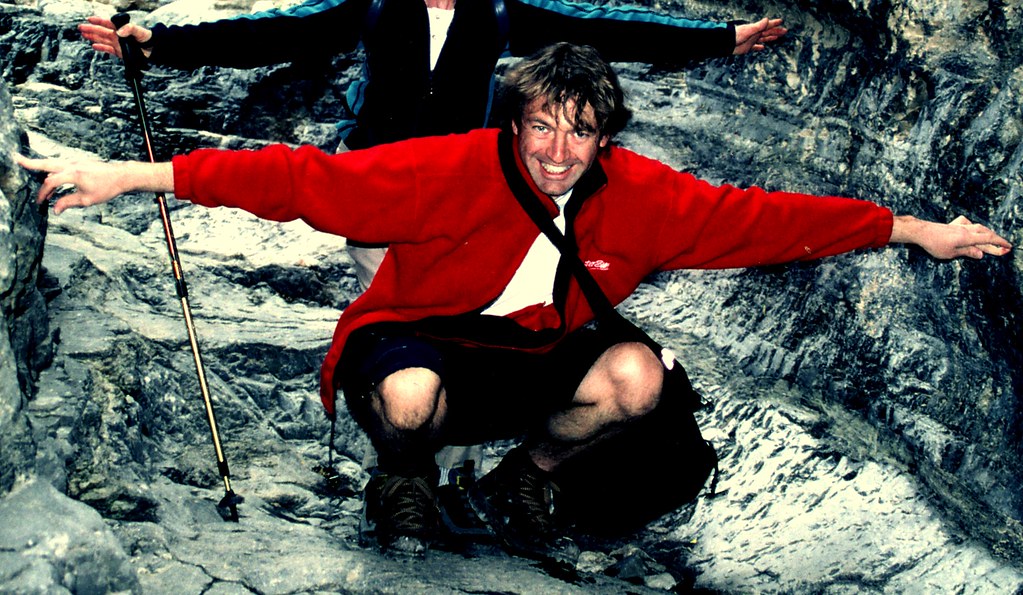
Hey there, and welcome to my online diary.
It's just an aide memoire of whatever I happen to have done lately, be that going on holiday or watching a movie.
Where I've said that I hate something, it's probably because I care about it enough to want better for it.
I am also a Christian, but I think everyone defines that box differently.
Agreement is not required, but friendliness helps. :)
Peace,
Steve.
(ῧ)
View my complete profile
View my mug

View my photos
View my flatmates

View my insides
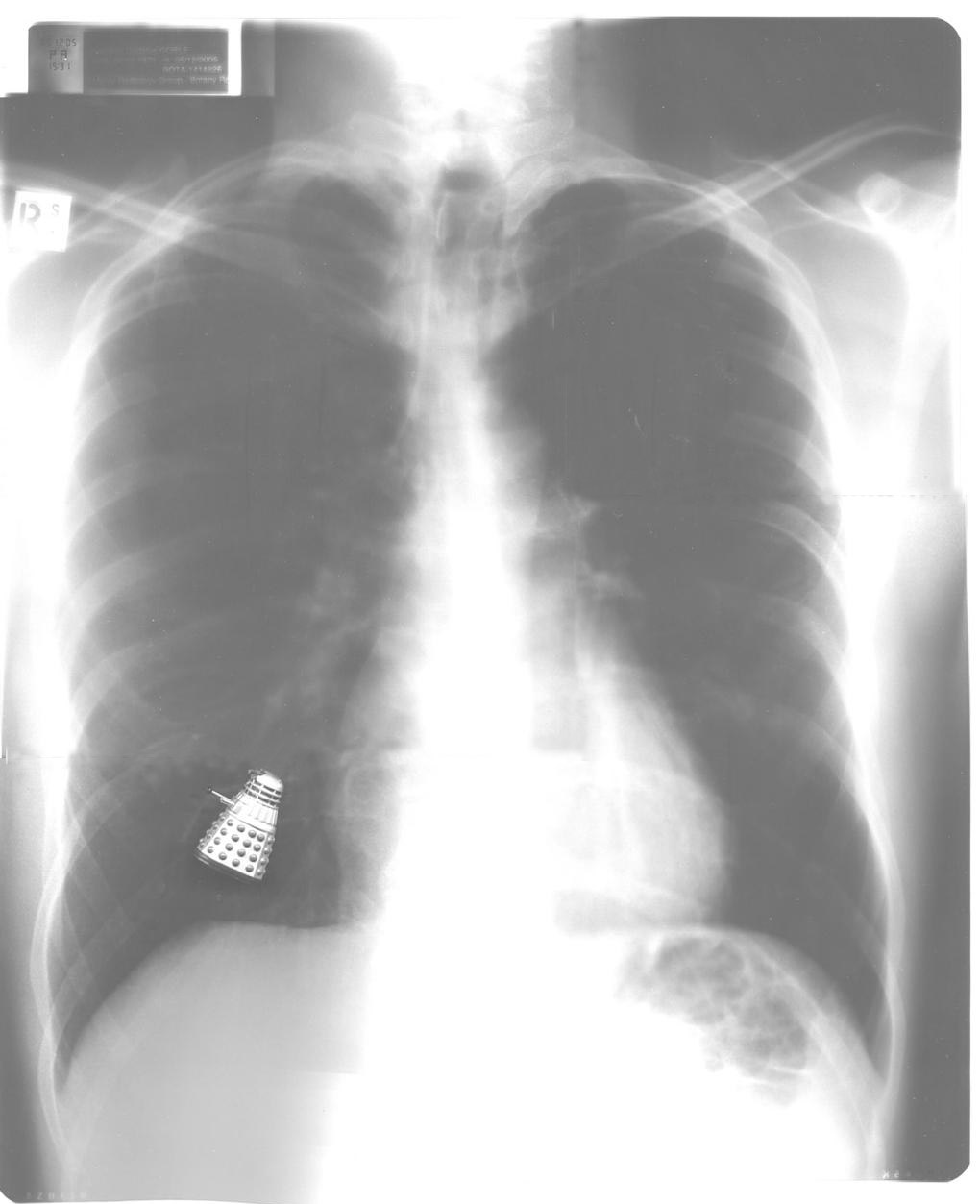
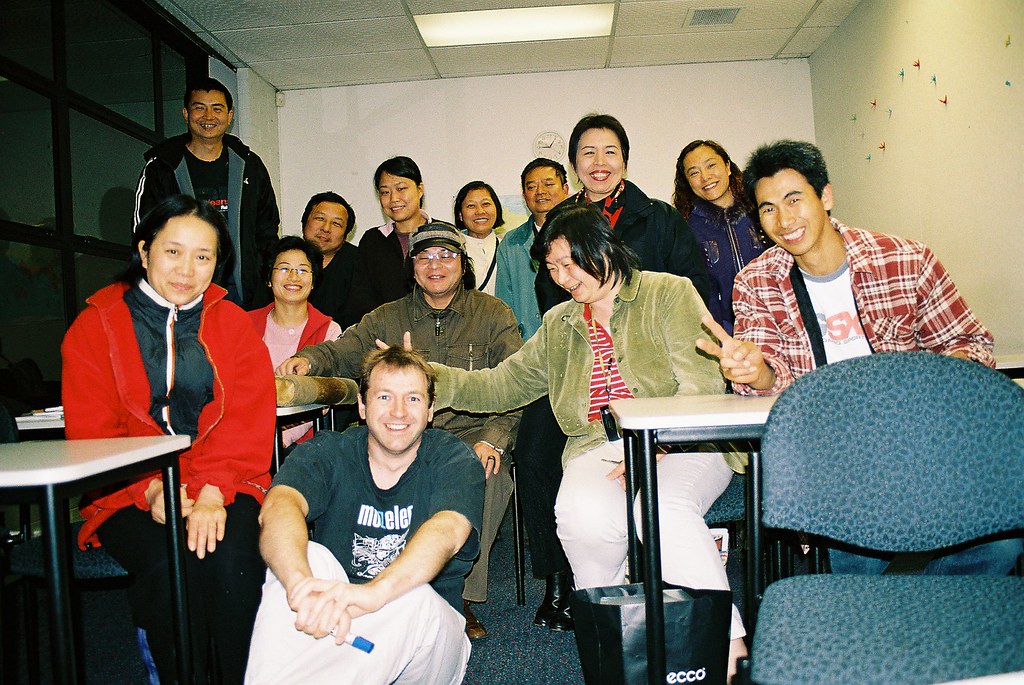
View my colleagues
View my students
View my YouTube channel
Some things I feel proud about:
Film-making
Radio
Acting
Still photography
Teaching
I’ve travelled a bit
I like diversity
I’m a good listener
I can spell millennium
I buy fair trade coffee and free range eggs
I exercise
I’m positive-minded
Honesty and doing the right thing are more important to me than anything else, although I consistently fail at them
Some things I'm still working on:
All of the above
I have difficulty remembering names and faces
I have little sense of geographical direction
Time-management (I need deadlines)
I rarely get to bed early
I’m not very good at making things happen
I sometimes get annoyed at computers
I don’t like confronting people
I find it hard to tell people ‘no’
Sometimes people disbelieve me
I was unpopular at all my schools, and had to move because I wouldn't hit anyone back
I find prayer difficult
I sometimes mistrust God
I've never seen Lord Of The Rings or The Empire Strikes Back, so please don't tell me what happens. :)
Neither here nor there:
I like plain white or loud colours
I’m always busy
I'm quiet in a crowd
I don’t like using the phone
I've never been on a date
Yes, that has always hurt
This is what I look like when I'm very tired:
 :)
:)
Archives:
Goble Ads:
Click below to buy my mum's latest book from Amazon!!


Current favourite Bible verses:
I may promise life to a good man, but if he starts thinking that his past goodness is enough and begins to sin, I will not remember any of the good he did. He will die because of his sins.
Ezekiel 33:13
I may warn an evil man that he is going to die, but if he stops sinning and does what is right and good - for example, if he returns the security he took for a loan or gives back what he stole - if he stops sinning and follows the laws that give life, he will not die, but live.
Ezekiel 33:14-15
If he changes the way he thinks and acts, forgive him.
Luke 17:3b
The word of truth lasts forever,
but lies last only a moment.
Proverbs 12:19
Be honest and you show that you have reverence for the LORD;
be dishonest and you show that you do not.
Proverbs 14:2
You should each judge your own conduct. If it is good, then you can be proud of what you yourself have done, without having to compare it with what someone else has done.
Galatians 6:4
Links
Friends' blogs:
 Brett
Brett
 Random Dave
 Scottish Dave
 Frank
Frank
 Greg
Greg
 Herschel
 Jacob
Jacob
 Jean
Jean
 Joe
Joe
 Jonathan
 Melissa
 Melva
Melva
 Paul
Paul
 The Reynolds
 Rhett
Rhett
 Sara
Sara
 Sarah
Sarah
 Tim
Tim
 My church
's podcasts
My church
My church's podcasts
Media:
Bill And Ted's Excellent Online Adventures
Christian Broadcasting Association
Christian Resources Centre
Doctor Who Guide
Doctor Who Image Archive
Dwayne's Super 8 processing
Filmguide.co.nz
God's ipod
Lego - the Bible
Lego - Star Wars
Marvel Chronology Project
Moon Landings Revealed
Sesame Street songs
Sliders
Tony Hawks
TV Ark - British TV Museum
TV logos
"Weird Al" Yankovic
Useful Resources:
Acronym Finder
Amazon.com
Anagram Finder
BibleGateway.com
BookCrossing.com
cession church
Flightradar24.com
Oak Hall Christian Holidays
Old versions of computer programs
Printable rulers
The Society For The Protection Of Unborn Children
Time - local
Time - world


In the event that you consider there to be a work of yours quoted on here which you'd rather wasn't, please do just let me know - thanks. In over nine years of blogging, just one person has done this, and I complied immediately. Images have been used according to 'fair use' laws.